
"coffee in politics"
6000 article(s) found

The flavor of Tanzanian coffee describes the flavor of Tanzanian coffee. How about Tanzanian coffee?
Due to political instability and rampant diseases and insect pests, the coffee industry in Tanzania has been damaged, leading to a decline in the overall level of coffee and instability in quality, which in turn lead to lower prices, which are usually the result of a further decline in the coffee industry. What's more, it is estimated that more than 12% of the Arabica coffee grown in northern Tanzania from 1969 to 1985 was smuggled.

The history of coffee. How much do you know about the history of coffee?
When we enjoy coffee, most of the time we just think of it as a drink, a different, unique, refreshing drink, but seldom think about it: what's the big thing about a small coffee? Just because coffee is astonishingly famous, it is the second largest export product in the world after oil. Since it was recognized and first eaten by human beings, it has been used for the first time.

The legendary coffee culture knowledge that coffee can change the world.
Have you ever had coffee? Does the coffee really taste good? In fact, when we enjoy coffee, most of the time we just regard it as a drink, a different, unique, refreshing drink, but seldom think about it: what is the big name of a small coffee? Just because coffee is amazingly big, it is the second largest coffee in the world after oil.

Coffee beans of moderate particle size. Flavor, taste, aroma. Description
In many countries coffee production is severely affected for political reasons. The coffee industry in Nicaragua is no exception. The revolution of 1979 forced coffee growers to flee to Miami. A period of uncertainty ensued as the government considered whether to reallocate land (including many plantations), resulting in coffee shortages and declining yields from the early 1970s.

Excellent taste of Arusha coffee estate in Tanzania. Flavor characteristics
The Tanzanian flag is rectangular in shape and has a length to width ratio of 3:2. The flag is composed of green, blue, black and yellow. The upper left and lower right are two equal right triangles of green and blue. The black wide strip with yellow edge runs obliquely from the lower left corner to the upper right corner. Green represents land and Islam; blue represents rivers, lakes and seas; black represents African blacks

The delicate aroma of Tanzania's fine coffee beans Flavor Taste Manor Features
Tanzania has a federal presidential system. It has long been ruled by the Revolutionary Party and has a stable political situation. The first multiparty elections were held in October 1995, and the opposition Citizens United Front (CUF) accused the Revolutionary Party of fraud in the elections and refused to recognize the Salmin government in Zanzibar. In June 1996, the Revolutionary Party held a national congress, and Mkapa was elected chairman of the Party to realize the unified leadership of the Party and the government. 1

The origin and development history and culture of fine coffee beans
In many countries coffee production is severely affected for political reasons. The coffee industry in Nicaragua is no exception. The revolution of 1979 forced coffee growers to flee to Miami. A period of uncertainty ensued as the government considered whether to reallocate land (including many plantations), resulting in coffee shortages and declining yields from the early 1970s.

Moderate acidity, fragrant and delicious Nicaraguan coffee flavor manor introduction
Columbus arrived here in 1502 and reached the east coast of Nicaragua. In 1522, Spanish colonists began to conquer the region. The cities of Granada and Leon were founded in 1524. From then on, Nicaragua became a Spanish colony and came under the jurisdiction of the Governor's Office of Guatemala. The city of Leon developed into a political and cultural center; Granada became a commercial and agricultural center. In the later period of colonial rule

Coffee flavor and taste of Kilimanjaro, Tanzania. Introduction to the characteristics of fine coffee beans in the manor area.
Tanzania has a federal presidential system. For a long time, the Revolutionary Party was in power for a long time, and the political situation was stable. In the first multi-party general election held in October 1995, the opposition Civic United Front (CUF) accused the Revolutionary Party of fraud in the general election and refused to recognize the Zanzibar Salmin government. In June 1996, the Revolutionary Party held a national Congress, and Mkapa was elected chairman of the party, realizing the unified leadership of the party and government. one

Silky and meticulous Tianci Manor Fine Coffee Bean Planting Location Climate Elevation Profile
In many countries coffee production is severely affected for political reasons. The coffee industry in Nicaragua is no exception. The revolution of 1979 forced coffee growers to flee to Miami. A period of uncertainty ensued as the government considered whether to reallocate land (including many plantations), resulting in coffee shortages and declining yields from the early 1970s.

Introduction to Puerto Rican coffee with pure, fragrant and granular flavor and taste of manor boutique coffee
Puerto Rico has a history of producing coffee for nearly 300 years and was once one of the most productive regions in the world. According to the Starbucks website, Spanish explorers brought coffee from Louis XIV plantations in France to the island in 1736. The fame of Yaucono Selecto was once indistinguishable from that of Kona in Hawaii and the Blue Mountains in Jamaica. It was also the palace of European kings and Vandi.

Chongqing first Campus Coffee chain: bean Sprout Cafe
Three years ago, Xu Tao and his three entrepreneurial partners were sophomores at Chongqing Southwest University of political Science and Law, and four energetic young people nurtured the first bean sprout cafe with strong idealism. To the surprise of the friends, this weak campus cafe can grow rapidly and occupy colleges and universities in Chongqing gracefully at the rate of an average of one branch a year.

Introduction to the flavor and taste characteristics of coffee in Lazmus Manor, Colombia.
About 1000 BC, there was a hunter-gatherer society near Bogota today. Around 1000 AD, the American Indians created a political system. It is a pyramid-shaped structure with the top of the tower as the leader. In today's Colombia, two civilizations have adopted this complex system. One is Tayronas in the Caribbean region, and the other is Bogota

The taste of Guatemalan coffee with elegant aroma. Introduction to fine coffee in manor area.
From 1871 to 1944, the country began to devote itself to economic modernization. At the same time, the United Fruit Company, which is dominated by the United States, has also begun to buy large coffee and banana estates in Guatemala and intervene in Guatemalan politics. After the revolution in October 1944, the former dictator was overthrown, democracy and freedom of expression were implemented in Guatemala, and the first law in Guatemalan history to protect the interests of workers came into force.

The History and Culture of Coffee beans Coffee changes the World
United States: giving up hundreds of millions of inheritance rights for coffee beans in the 1970s and 1980s, the rulers and generals of Guatemala and El Salvador had huge coffee fields, devouring most of their profits, while farmers had no meals. Many farmers, especially Indians, joined the Communist guerrillas and attacked government forces, and the authorities responded with the Holocaust, aggravating the deep feud between coffee farmers and the government.

Introduction of coffee flavor and taste characteristics of Costa Rican San Roman Manor with rich taste
Costa Rica is one of the first countries in the Americas to establish a democratic system, and the idea of freedom and equality is deeply rooted. Costa Ricans love peace and oppose violence. As early as December 1, 1948, Costa Rica announced the abolition of the armed forces and the establishment of the National Guard, becoming the first country in the world without an army. [8] in 2007, there were 18000 police officers, which put an end to the possibility of soldiers interfering in politics.

Panamanian Kasha Coffee with citrus and floral flavor and taste manor features boutique coffee
Judicial power is exercised by the High Court and the State Procuratorate. The High Court has nine judges appointed by the government and approved by Congress for a term of 10 years. President of the High Court Alejandro Moncada Luna. National Attorney General Annabel Feng. [5] Democratic change Party, the ruling coalition of political parties: the largest party. It was established in May 1998 and merged into the former Patriotic Union Party in March 2011. Existing party members
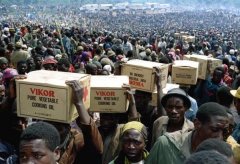
Introduction to the origin of coffee-"Rwanda, Burundi" of the African Department
For the exchange of professional baristas, please follow the coffee workshop (Wechat official account cafe_style) today to introduce the five East African countries, and then introduce the coffee from the five East African countries individually. In 2015, five East African Communities, including Kenya, Tanzania, Burundi, Rwanda and Uganda, proposed that five countries be merged into a federal state, using a common constitution, president, parliament and goods.

The elegant aroma of Antigua Coffee Manor in Guatemala introduces the flavor and taste of Ratti.
Guatemala consists of the Supreme Court, the Constitutional Court, the Procurator-General's Office, the National Public Prosecution Office and the Ministry of Internal Affairs. There shall be the Supreme Court, the Court of Appeal and the Primary Court. The Supreme Court has 13 justices for a term of five years, which are elected by the Parliament and can be re-elected. The President of the Supreme Court is also the Chairman of the National Judicial Council, elected by a majority of 2 judges for a term of 1.

Coffee changes the world for coffee beans to give up hundreds of millions of inheritance rights
United States: giving up hundreds of millions of inheritance rights for coffee beans in the 1970s and 1980s, the rulers and generals of Guatemala and El Salvador had huge coffee fields, devouring most of their profits, while farmers had no meals. Many farmers, especially Indians, joined the Communist guerrillas and attacked government forces, and the authorities responded with the Holocaust, aggravating the deep feud between coffee farmers and the government.